


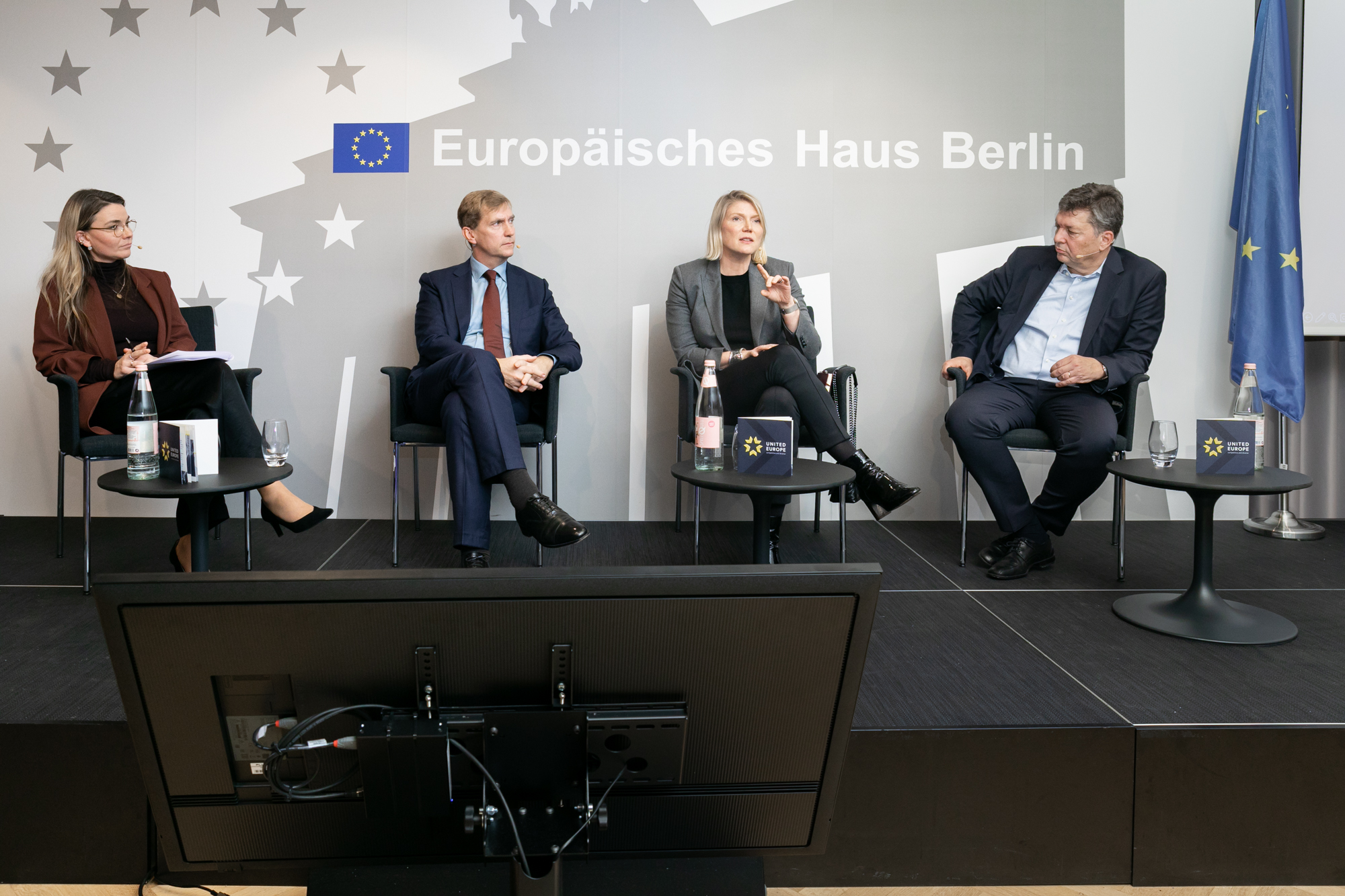
Against the backdrop of the Brandenburg Gate in Berlin, this high-level event brought together leading voices to discuss the future of transatlantic relations, European security, and competitiveness in a rapidly changing geopolitical landscape.
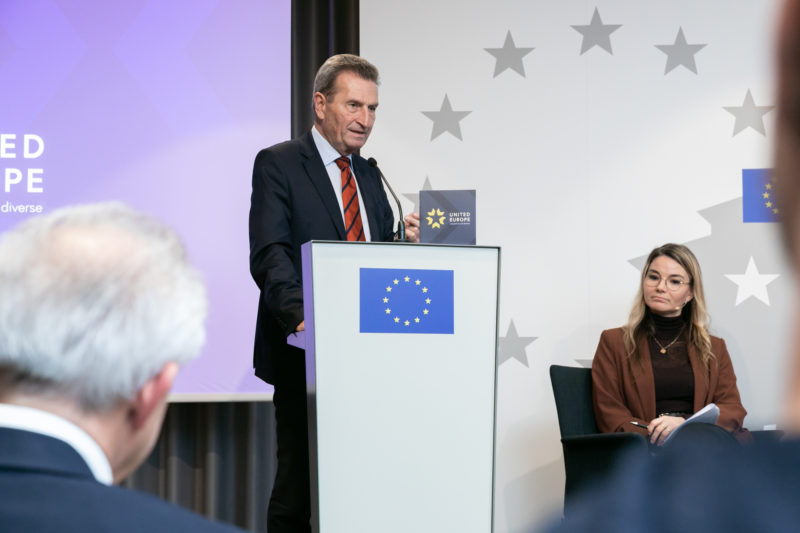 The evening featured President of United Europe, Günther H. Oettinger, and Deputy Head of the Representation of the European Commission, Mrs Gosia Binczyk, setting the strategic frame for an in-depth debate on Europe’s role between the United States, global power shifts, and internal transformation.
The panel discussion, moderated by Dr. Laura Hirvi, included:
-
Cathryn Clüver Ashbrook, Bertelsmann Stiftung
-
Wolfgang Niedermark, Member of the Executive Board, BDI
-
Felix Herter, Managing Director, Eurazeo
The discussion highlighted the urgent need for a clear European strategy—combining security, economic resilience, innovation, and democratic cohesion—to move from reaction to proactive leadership on the global stage.
1. Looking Back: The United States as a Pillar of European Security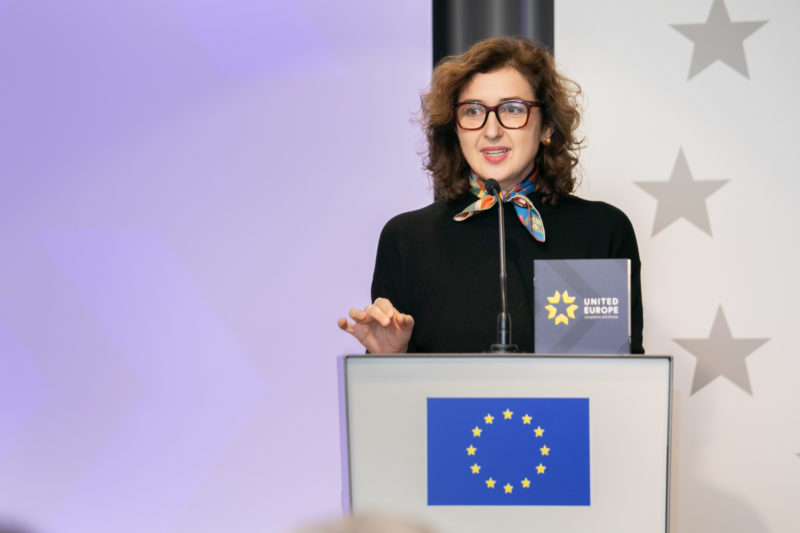
Günther H. Oettinger emphasized that Germany and Europe have historically benefited enormously from U.S. security and economic support—from reconstruction after World War II to the reunification of Berlin and major American investments. But today it is clear: Europe must build more autonomous security capabilities. The latest U.S. National Security Strategy is a final wake-up call to increase defense spending and take responsibility for its own security.
2. Europe Between Old Alliances and New Realities
Europe should nurture the transatlantic partnership but must also diversify its strategic relationships—working more closely with countries like for example Japan, Australia, South Korea, the Western Balkans, and the United Kingdom. The global system conflict of “democracy versus autocracy” demands a coherent European strategy.
 3. “The American Wake-Up Call” – Shifts in the U.S. Directly Affect Europe
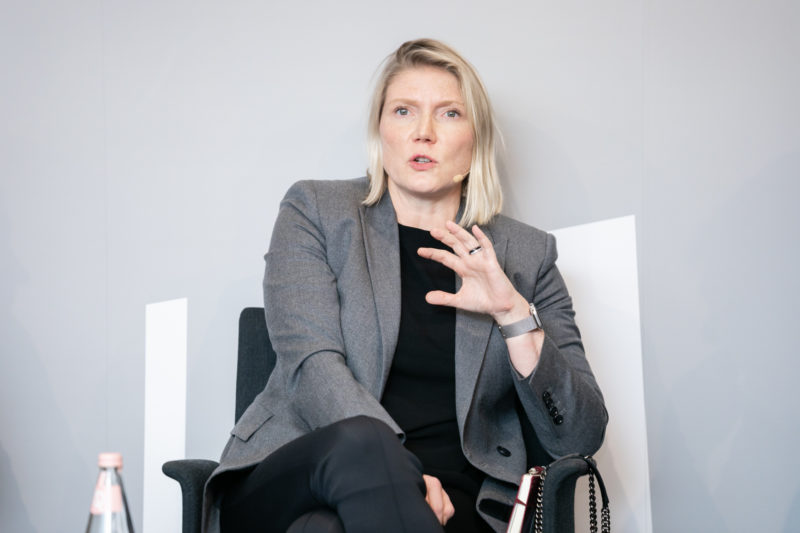
Cathryn Clüver Ashbrook, author of “Der Amerikanische Weckruf”, outlined the political shifts taking place in the United States:
- The realignment has been visible for years: Project 2025, JD Vance’s speech, and new U.S. foreign policy priorities.
- China is named as the primary challenger, Russia as the acute threat—Europe is losing geopolitical priority.
- Steve Bannon openly suggests that the U.S. has “backed the wrong ally for 80 years.”
- Official documents and political messaging increasingly show a neo-colonial tone toward Europe.
- Money from both the U.S. and Russia is flowing into right-wing parties across the continent.
Europe can no longer afford to deny these signals, Clüver Ashbrook stressed. Reaction is not enough—Europe must become proactive.
4. Economy: Pessimism, Uncertainty – and New Opportunities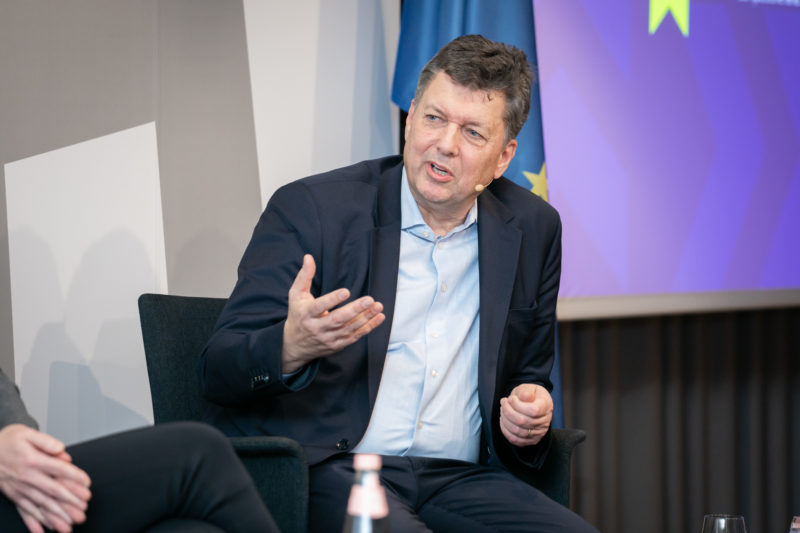
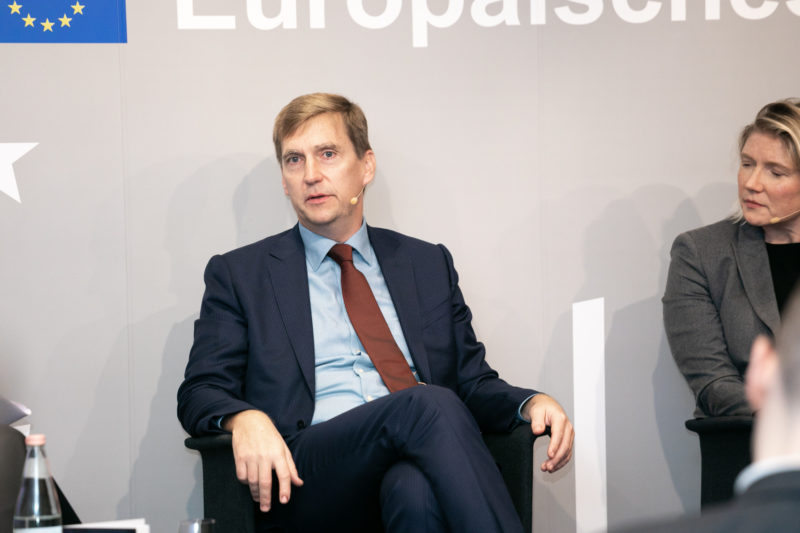
Wolfgang Niedermark (BDI) and Felix Herter (Eurazeo) described how geopolitical shifts and market volatility are shaping Europe’s economic landscape:
- Many investors are retreating from large equity investments in the US, yet sustainable European assets are becoming more attractive to U.S. investors.
- Europe’s innovative potential exists, but its regulatory environment often blocks it. “The EU must not become Silicon Valley’s bureaucracy.”
- Confidence in the European Union is eroding among industry and family businesses, many of which are looking toward Turkey, Canada, Africa, or China.
- Europe must strengthen its competitiveness—but cannot achieve this with today’s EU structures alone.
 5. Strategic Reset: Innovation, Defense, and New Mindsets
The experts agreed that Europe must:
- modernize traditional industries while investing in future technologies,
- shift its mindset—from stagnation to strategic ambition,
- build talent ecosystems for biotech, frontier tech, and deep tech,
- address economic and security vulnerabilities, from cybersecurity to nuclear deterrence.
Europe still lacks a strategy for economic statecraft—the ability to leverage economic strength to negotiate confidently with the U.S. and other powers.
6. Shared Final Message
Europe stands at a historic inflection point.
The panelists agreed:
- We need to move faster.
- We need to be bolder.
- We need a European strategy that integrates economic strength, innovation, and security.
Only through shared responsibility, new alliances, and renewed European confidence can the EU navigate the geopolitical challenges ahead.