


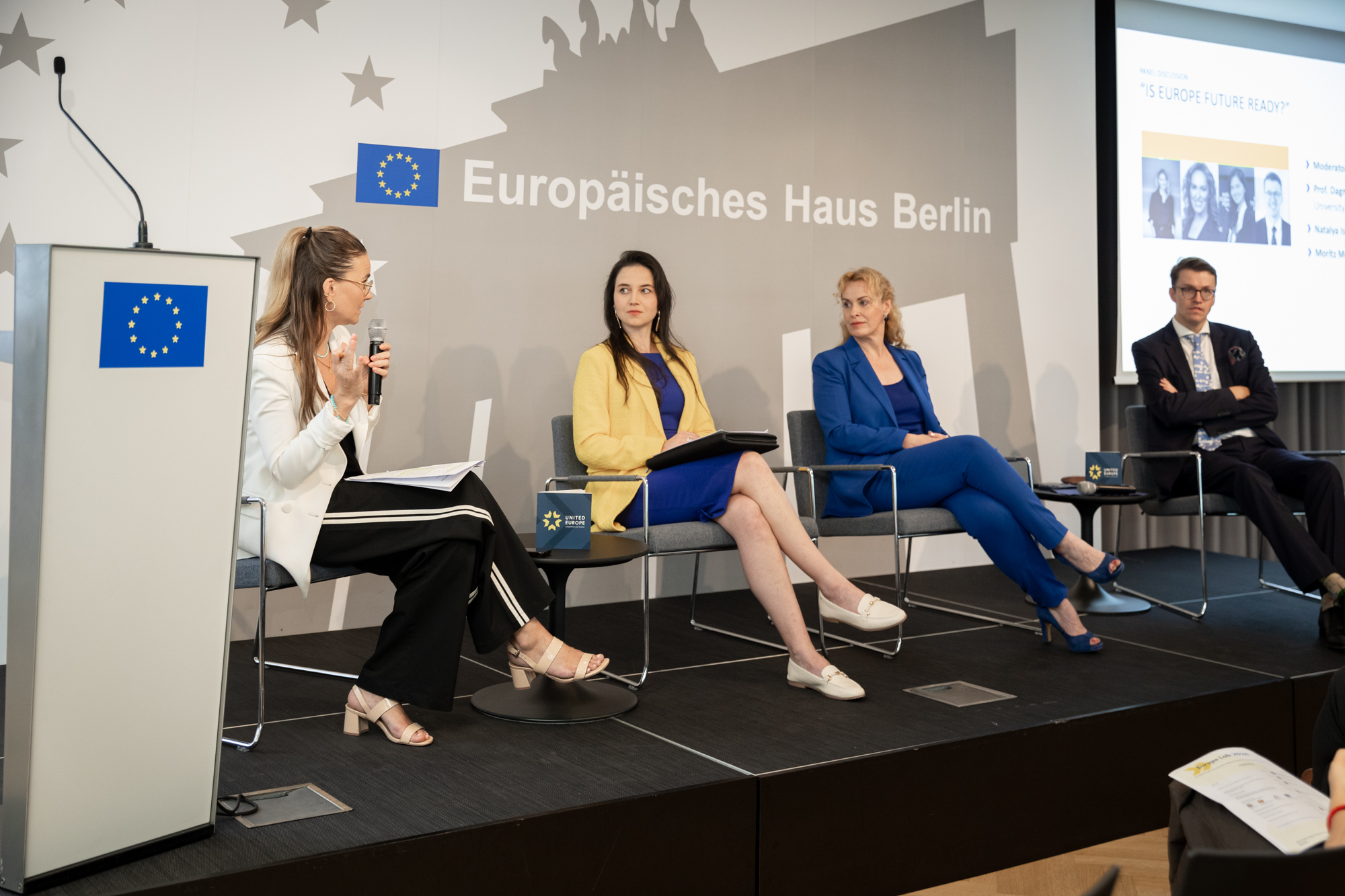
Is Europe Future-Ready? That was the question our Europe Lab panel on 8th September set out to answer. Moderated by Laura Hirvi (META), the discussion brought together scientific expert Prof Dagmar Schuller (Landshut University), chip industry expert Moritz Moelle (GlobalFoundries) and Ukrainian transformation leader Natalia Iskovych (Support Ukraine Now) to explore who stands to benefit from Europe’s future readiness and what Europe must do to stay in the race. The panel opened with a frank assessment: right now, Europe is not competitive. But the field is moving fast and that creates openings.
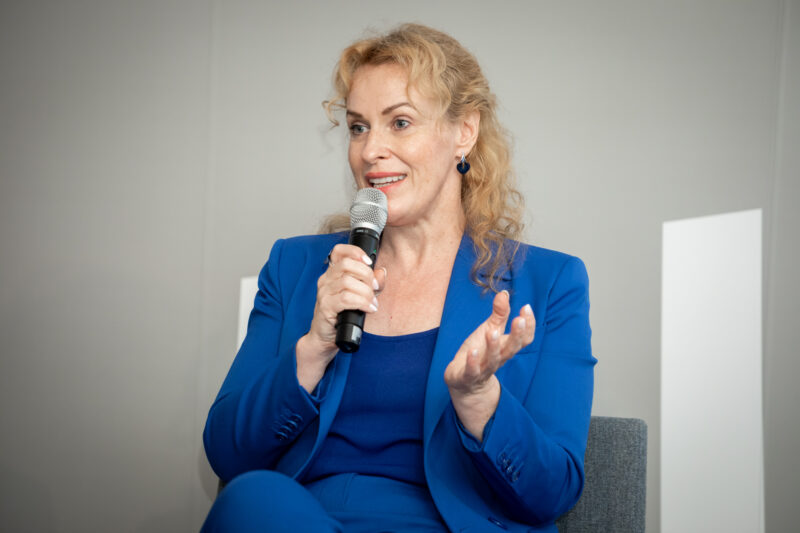 As Dagmar Schuller put it, the real question is what Europe already has and how it can build from it. Talent is not the problem. Europe has top-notch research. The weakness lies in turning that research into products and companies. Germany in particular came up as a culture driven by perfection, where failure is still heavily stigmatised.
“Don’t believe the naysayers”
Schuller, who is also the founder of audEERING, shared her own story. Her company, which built technology for analysing speech, was recently acquired. From the very first moment, she was told it would never work because it was too niche. Her advice to the room was to stop listening to the naysayers. Failure should be analysed, she said, but it is also necessary. What makes the difference is what comes after the failure: learn from your mistakes, persevere and collaborate.
Laura Hirvi then asked the audience whether they believe Europe can compete in the AI race. There was some reason for optimism: 2025 saw a record number of start-ups founded, and around a third of them were directly linked to AI.
A view from Ukraine
Natalia Iskovych brought the perspective of a country outside the EU. How a nation sees itself matters a great deal for today’s security architecture. She reminded the audience that Silicon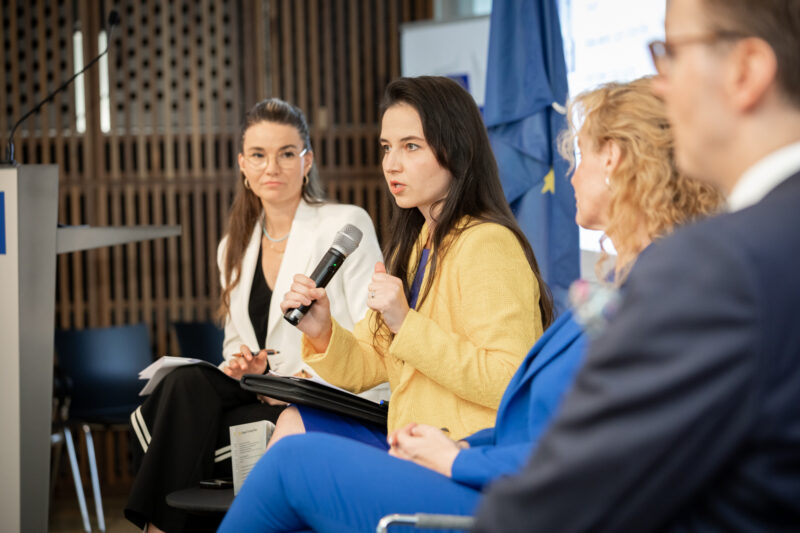 Valley grew out of military technology, and that Europe once matched or even led the US and China in high tech. Singapore, which started from zero shows what determined catching up can achieve. Europe is in a crisis, she said, but it is also on the verge of huge potential. That requires however openness, including in defence cooperation.
 Dresden: chips are the steel of the 21st century
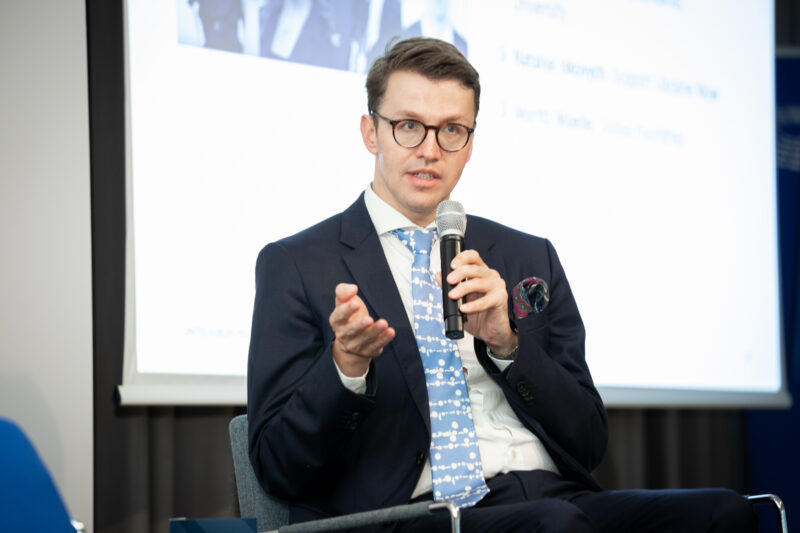
Moritz Moelle turned the discussion to semiconductors. Europe holds roughly 10% of the global chip market, and about half of the European chip production comes from a single city: Dresden. That didn’t happen by chance. A chip hub needs universities, suppliers and infrastructure, and energy costs remain a serious issue.
Dresden’s success came from a mix of things. Strong research was already there, and government then attracted investment. Today Infineon, Bosch and GlobalFoundries all operate there, after more than 16 years of steady work. The share of electronics in everything we use keeps growing, and so does the number of devices. Chips are “the steel of the 21st century.” Moritz added that AI will open up a much larger market for autonomous systems and factory robotics. Europe is well positioned in some areas, he said, but it needs speed and a clear technology agenda. “Let’s get to work.”
Munich: from research to application
Pointing to the Draghi report, Schuller stressed that European universities still play a leading role. TUM in Munich is one example, with the number of start-ups there rising sharply. Many people still don’t understand how AI, the large language models in particular, will transform the economy. “This is just the tip of the iceberg.”
Munich works because its stakeholders work together. Initiatives such as MunichOne bring researchers, companies and investors around the same table to solve concrete problems. There is also money in Munich, and that matters: it doesn’t work without money, and it doesn’t work with too little. More and more research is turning into companies. The recipe is to build alliances, share and embrace collaboration. The Bavarian government was praised for its support. The panel’s one request to policymakers was to show people what they can do instead of telling them what they can’t, and to listen to what the economy and start-ups need and act on it.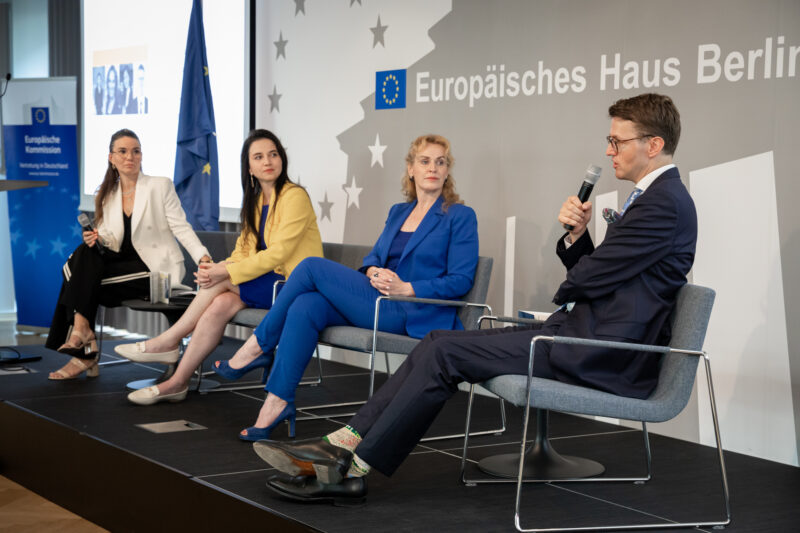
Regulation: from protection to enablement
Regulation ran through the whole discussion. Panellists described it as stifling, creating needless bureaucracy and holding back production capacity, which makes the upcoming Chips Act 2.0 evenmore important. Investment only pays off with scale. That means access to funding, access to markets and rules that companies can realistically comply with. “We all know what we can do and what we must do,” one panellist said. “Now we must act.” Dagmar Schuller called for a holistic view of regulation. Most rules exist to prevent bad things from happening, but too much protection can block implementation. The EU’s omnibus approach signals shift, yet fragmentation between national and European levels, and within Germany’s federal system, still adds complexity. Estonia and Finland show that things can run smoothly. Good examples should lead the way, and decision makers who are often far from the field need to see the impact that is possible.
Our takeaway
Europe has the talent, the research and, in places like Dresden and Munich, ecosystems that work. What it needs now is speed, the courage to fail, enough capital to scale, and regulation that enables. The message from the panel was clear: stop debating and start acting.