


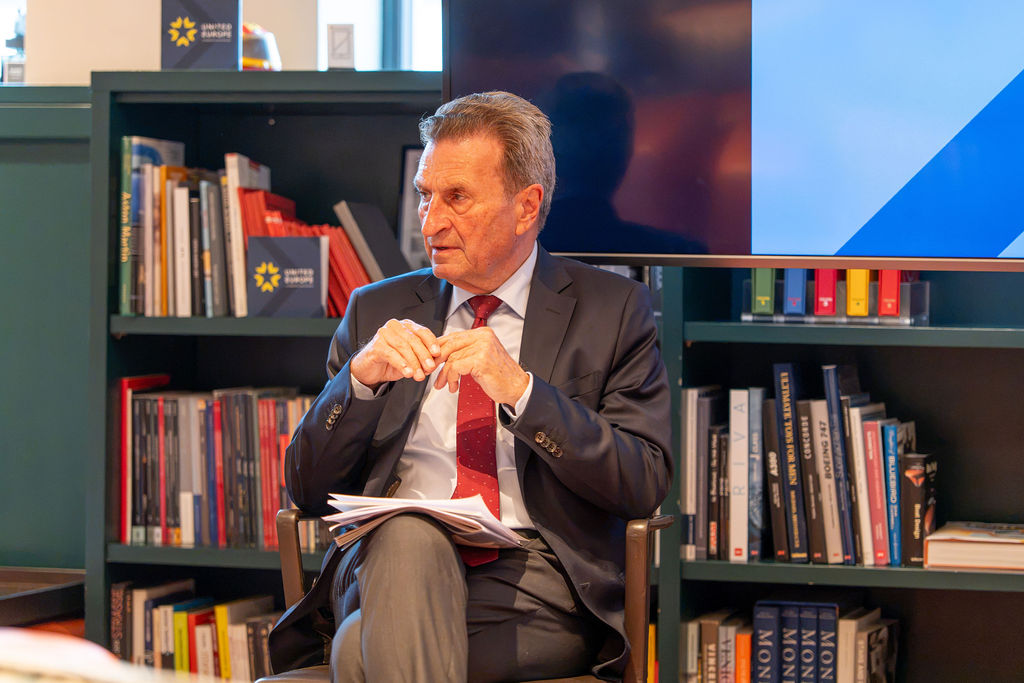
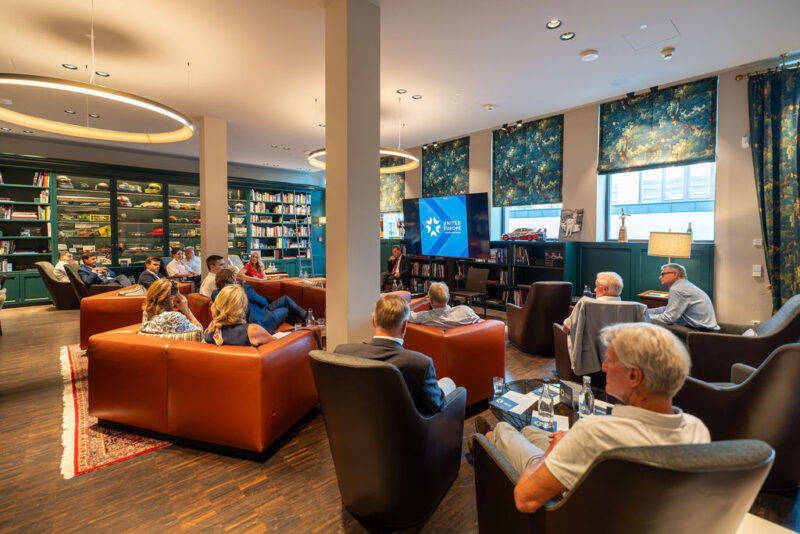
On June 26, United Europe welcomed over 40 members and invited guests to the Drivers & Business Club for another edition of its Members Talk & Political Stammtisch series. The event, held from 17.00 hrs to 22.00 hrs, focused on the timely and provoking question “Europe, Quo Vadis?” Against the backdrop of geopolitical shifts, economic transformation, and growing global competition, participants engaged in a lively discussion on Europe’s future, its strategic priorities, and the role it must play in an increasingly complex international landscape.
 Günther H. Oettinger had a clear message for United Europe’s members: Europe faces two defining challenges – security and competitiveness. Security today encompasses far more than military capabilities. It includes cyber resilience, technological sovereignty, energy security, and Europe’s ability to defend its interests in an increasingly uncertain geopolitical landscape. Equally important is restoring Europe’s competitiveness and enabling sustainable economic growth across key industries.
Europe has long been a global leader in sectors such as automotive, aerospace, chemicals, pharmaceuticals, advanced manufacturing, and engineering. Yet there is growing concern that Europe is steadily losing ground. Innovation, digital transformation, and industrial competitiveness are advancing more rapidly elsewhere, raising fundamental questions about Europe’s future economic position.
Recent geopolitical developments further illustrate Europe’s diminishing influence. The military action by the US against Iran, undertaken without prior consultation with European allies, prompted uncomfortable but necessary question: Is Europe still shaping global affairs, or is it increasingly becoming a bystander?
Oettinger warned that Europe risks becoming little more than an “open-air museum” – admired for its history, traditions and cultural heritage, but no longer a decisive political or economic force.
Sovereignty through Competitiveness
Oettinger emphasized that genuine sovereignty begins with economic strength. Europe must regain its capacity to innovate, invest and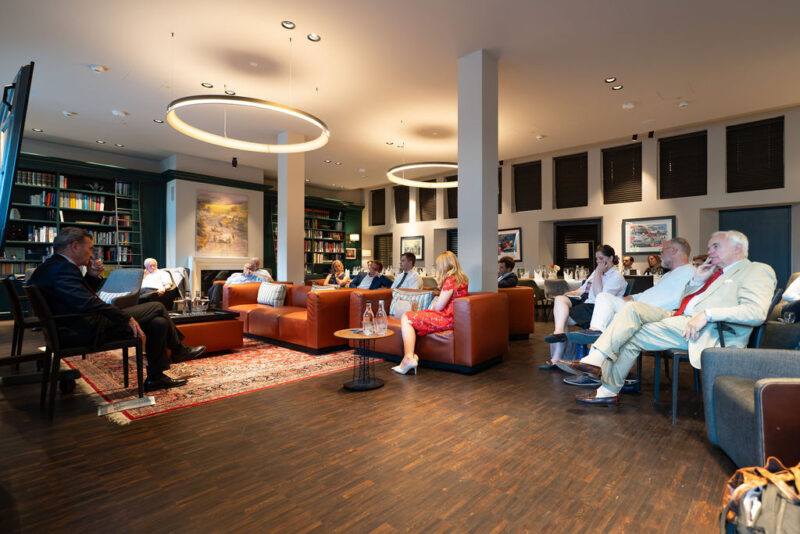 compete globally if it wishes to remain politically influential.
Germany together with its European partners, has a particular responsibility to lead this transformation. At the same time, Europe should broaden its strategic partnerships beyond the traditional transatlantic relationship, with the emerging group of middle powers including Canada, South Korea, Australia, India, the United Arab Emirates and Brazil – which share many of Europe’s interests and could become increasingly important partners in trade, technology, and innovation.
Strengthening these relationships would help Europe avoid finding itself squeezed between the competing interests of the US and China, Oettinger said.
Europe Needs a New Sense of Direction
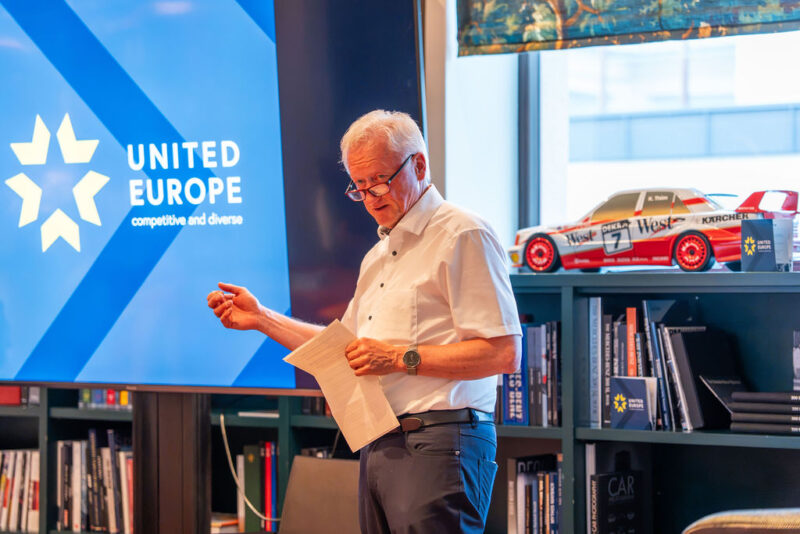
Beyond economics, Thomas Firnkorn reflected on a growing sense of disorientation across Europe. Reaffirming Europe’s identity and values was seen as equally important as strengthening its economic foundations. He captured this sentiment with the observation: “I am not afraid of a strong Islam. I am afraid of a weak Christianity.”
The statement was not intended as a comment on religion itself, but rather as a reflection on Europe’s confidence on its own cultural and democratic foundations. Europe, he argued, must regain a clearer understanding on its identity, values, and purpose if it wants to act with greater confidence on the world stage.
The Numbers Tell the Story
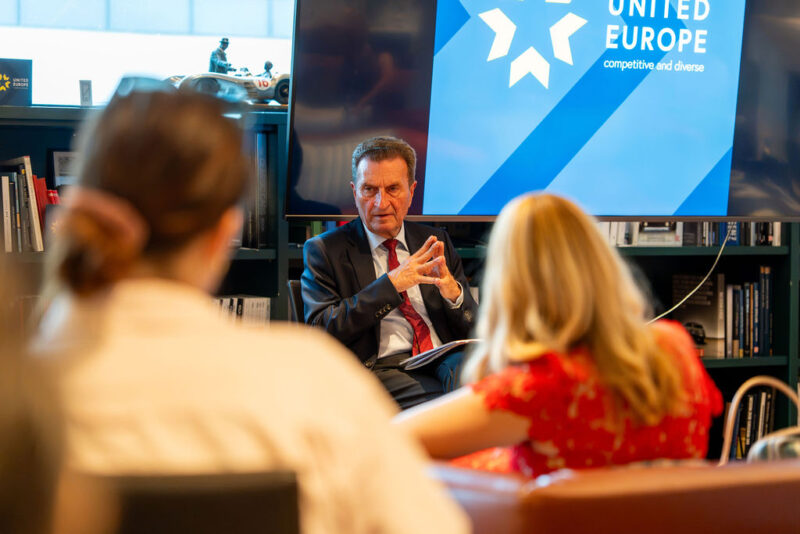
Only a few decades ago, Europe’s economic performance was broadly comparable to that of the United States. Today, the picture has changed dramatically. While the US has continued to strengthen its economic position and China has experienced extraordinary growth, Europe has fallen behind.
Oettinger’s conclusion was blunt: “Numbers don’t lie. Europe is losing.”
This is not solely the consequence of external developments but also of Europe’s own policy choices. Ambitious initiatives such as Lisbon Strategy, extensive consumer protection legislation, data protection frameworks and the Green Deal all pursue legitimate objectives. Oettinger stressed that these objectives must be balanced carefully with innovation, investment, and economic competitiveness.
Climate policy remains essential, yet Europe contributes only a relatively small share of global greenhouse gas emissions compared to China and the US. Climate leadership should therefore strengthen – not weaken- Europe’s industrial base. The challenge is to reconcile sustainability with competitiveness rather than allowing the two objectives to compete against one another.
Politics Begins with Civic Engagement
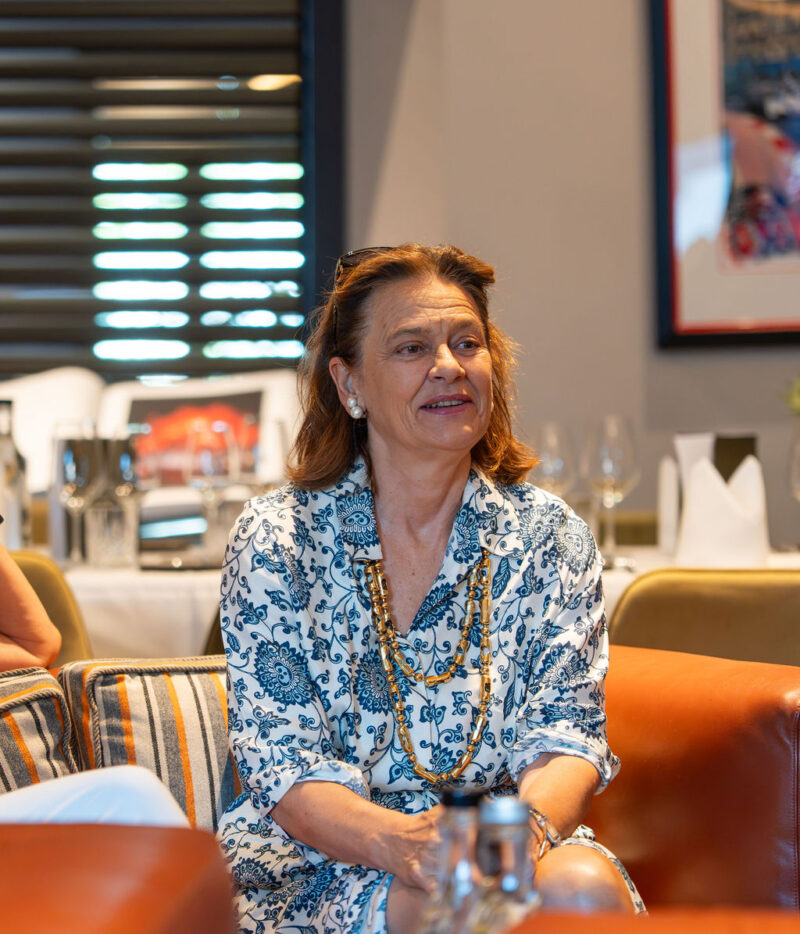
Another important theme was democratic participation. Effective government does not begin in Brussels, Strasbourg or Berlin – it begins within society itself.
Whether serving on a local council, a school board, a parish committee, a sports club or a cultural organization, civic engagement forms the foundation of democratic resilience.
Oettinger expressed concern that voluntary engagement is declining, particularly among C-level managers who often withdraw from public life after successful careers. Europe’s future depends not only on political leaders but also on citizens who are prepared to take responsibility within their communities: “We must start with ourselves and with our society.” Oettinger emphasized.
The China Challenge
China’s long-term strategic planning served as a striking contrast to Europe’s often fragmented decision-making.
Looking ahead to 2049, the centenary of the founding of the Communist Party has articulated clear ambitions: to become the world’s leading military power, technological leader, innovation hub and largest economy.
Combined with American leadership in software, AI and digital platforms, Europe risks finding itself caught in a strategic “sandwich” between two global superpowers.
Oettinger argued that Europe lacks ambition and speed. Regulation remains important but without investment, innovation and greater labour market flexibility, Europe risks continued industrial decline.
Example from Germany’s automotive supplier industry – including restructuring and significant workforce reductions at companies such as Mahle, Bosch, ZF and BMW – illustrate the structural pressure facing Europe’s industrial economy.
Three Pillars for Europe’s Future
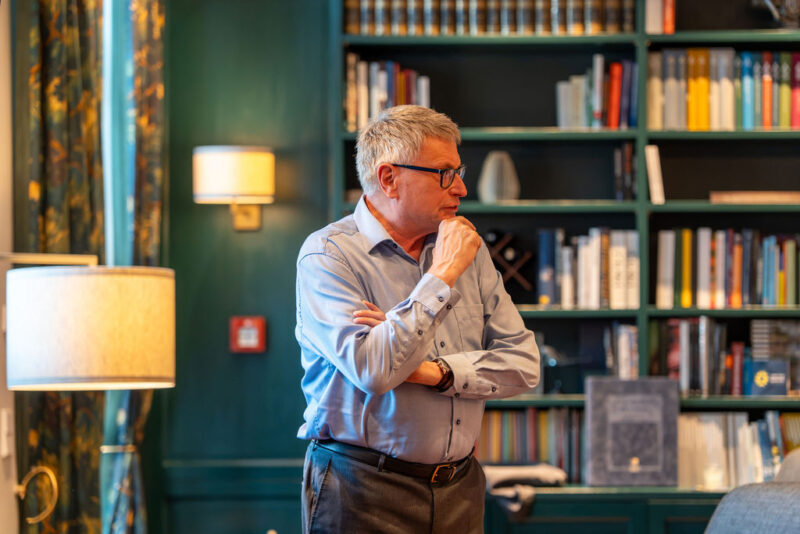
Otto Schell identified three strategic priorities that should guide Europe’s future:
- Time is the new currency. Europe must accelerate decision-making and implementation. Speed has become a decisive competitive advantage.
- Transforming existing industries. Europe’s traditional industrial strengths must successfully transition into the digital, AI-driven, and sustainable economy.
- Education and talent. Investing in skills, innovation and future generations remains essential for long-term competitiveness.
A Call for Leadership
Oettinger concluded the discussion with an appeal for leadership and optimism. Europe needs pioneers – individuals willing to lead by example in politics, business, academia, and civil society. Leadership cannot be delegated to governments alone. Every citizen has the potential to become a role model and contribute to Europe’s renewal.
Europe continues to possess strengths: a social market economy, democratic institutions, scientific excellence, entrepreneurial talent, and a rich tradition of cooperation.
The central question is therefore not whether Europe has potential, but whether it can mobilize the potential with sufficient determination, confidence, and ambition.
The discussion ended where it began: Europe, Quo Vadis? The answer will depend not only on political decisions in Brussels or national capitals, but on Europeans and their willingness to rediscover confidence and identity, invest in education and competitiveness, stand to its values and defend them if necessary and most importantly actively shape its future.