


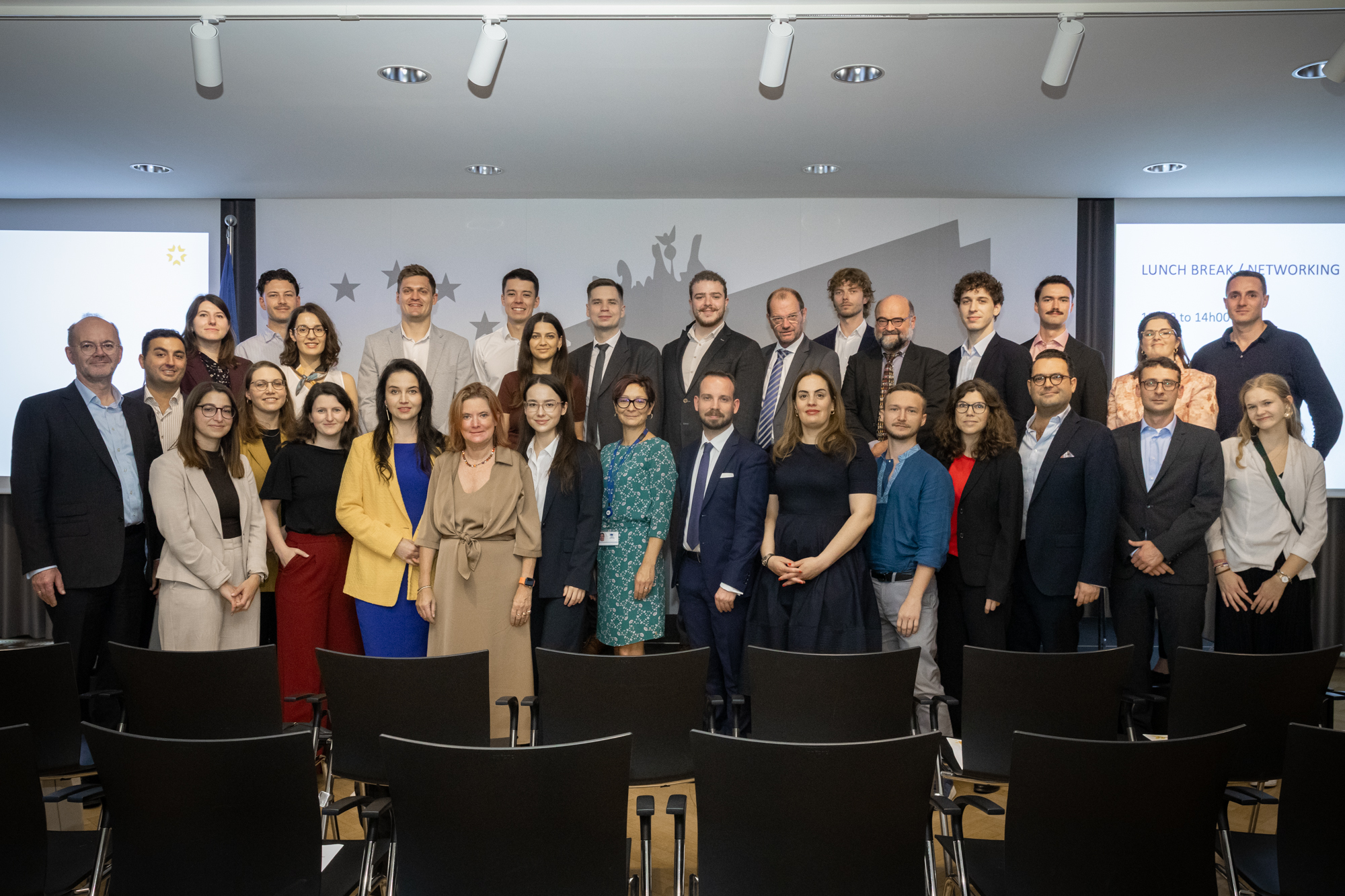
On September 8, 2026, United Europe held the Europe Lab 2026 at the House of the European Union in Berlin. From 12:00 to 18:00 hrs, speakers from politics, security and industry looked at one question: can Europe turn its ambitions into real strengths in energy and security? Their answer was yes, but only if its moves much faster and with more courage than it has so far.
You can watch the full presentations of the day on our YouTube Channel.
Turning achievements into resilience
In her welcome, Manica Hauptman (Head of Political Section at the Representation of the European Commission) said Europe reacted decisively when the war exposed its depend
encies, but its efforts since then have been too slow. Europe needs more grids, stronger connections and deeper integration. Climate goals and competitiveness can go hand in hand. Still, the single market is fragmented, and research and innovation too often fail to scale. Initiatives such as the Chips Act, AI Act, EU Inc and the push for simplification are important steps. Hauptman named risk aversion as one of Europe’s biggest obstacles, and the fiscal single market as the “elephant in the room”, since almost everything including a possible European Defence Union, depends on the budget.
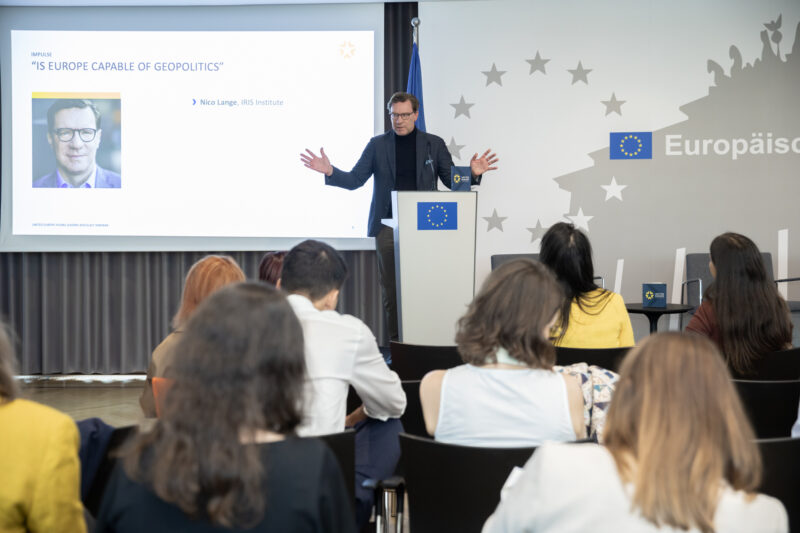
Is Europe Capable of Geopolitics? Daddy will not fix it for us!
Security expert Nico Lange (Founder at IRIS Institute) gave a stark diagnosis. Europe is growing at about 0.3%, while the US, China and India are growing much faster. Now in the fifth year of Russian war against Ukraine, Europe still debates whether to act. Lange argued that Putin’s aim is not a few kilometres of the Donbass but domination over Europe. With the US stepping back from guaranteeing Europe’s defence, Europe must realise that no one else will protect its business model. His priorities were leadership in dual-use technologies such as AI, drones and satellites, the ability to run European military operations, a Capital Markets Union, and treaty change if needed. He also urged leaders to talk to citizens like adults and tell them the truth.
Energy Security is European Security: Why National Energy Policy is no longer the answer
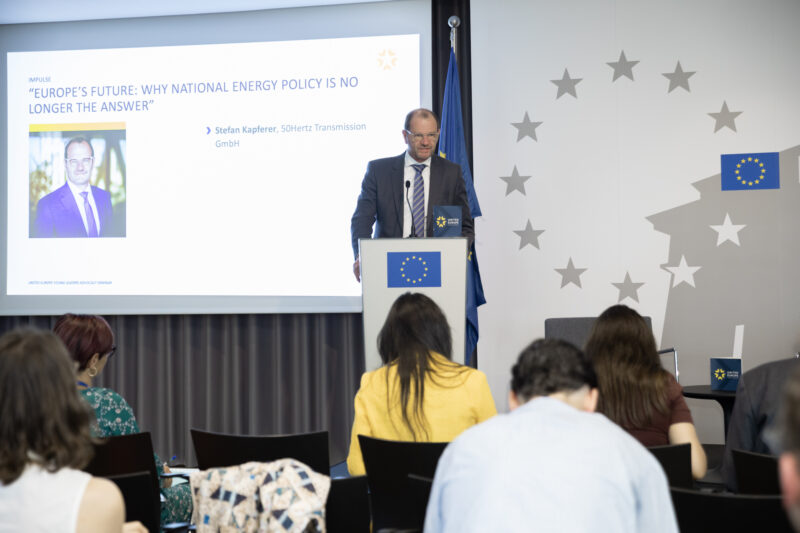
Stefan Kapferer, CEO of 50 Hertz, showed what European cooperation delivers. Europe integrated the Baltic grid system and synchronised Ukraine’s grid within days of the invasion. Cross-border projects such as the offshore wind hub in Bornholm cost far less than doing it alone. Unfortunately, national interests still block progress. Kapferer called for a mix of stronger European steering and regional cooperation, especially in the North Sea. He sees the energy transition as a chance to industrialise, based on “Made with Europe” rather than protectionism and with markets kept open to other middle power partners like Japan, South Korea and Canada. He also made business continuity and the protection of critical infrastructure top priorities.
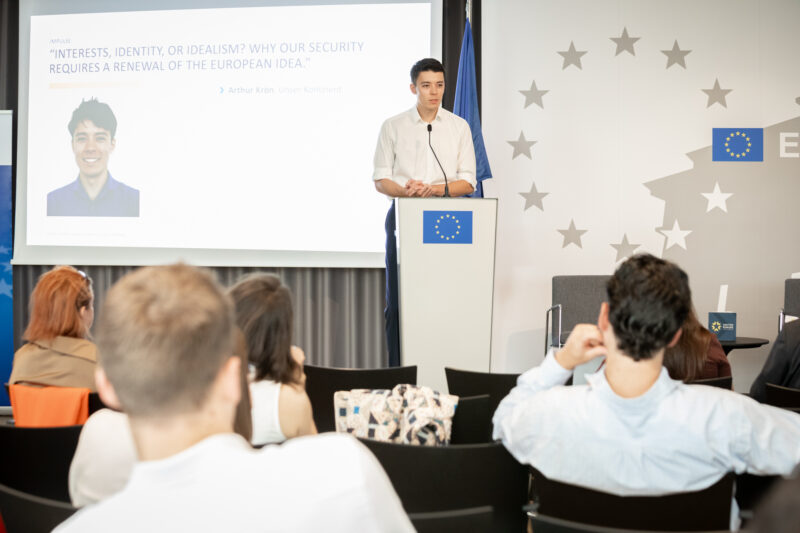
Closing the Gap between Alpbach and Allentsteig
Arthur Krön, Founder of Yourope, compared two places in Austria. One is is Alpbach, where young elites talk about Europe’s global influence. The other is Allentsteig, Austria’s largest military training area, where conversations sound very different. The European idea, he argued needs more Allentsteig and less Alpbach. Pro-Europeans must stop being the sugar-coated cocktail party and speak to the whole population.