


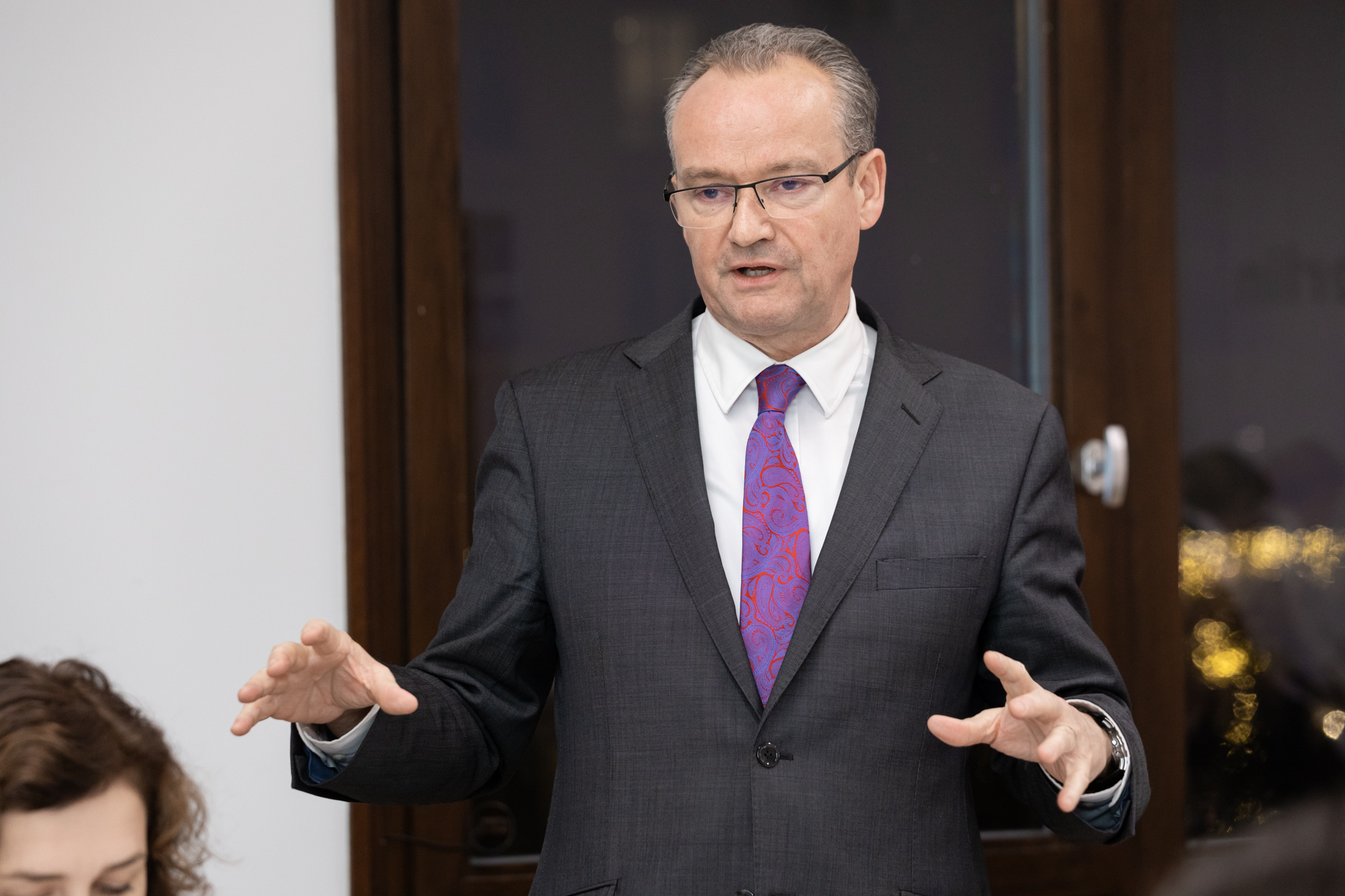
“If you want to go fast go alone, if you want to go far go together: A United Europe Is Our Only Future” – said Gunther Krichbaum, State Secretary of Europe at Germany’s Federal Foreign Office and United Europe Board Member during our Roundtable Dinner at the House of the European Union where he welcomed over 20 United Europe members alongside Barbara Gessler, Head of the Europe Commission Representation in Berlin, and Günther H. Oettinger, President of United Europe e.V..
 Our European Union is under pressure — from the outside and from within:
To strengthen Europe’s voice, we must first optimize how Germany positions itself in Brussels. Berlin needs a clear, consistent, and constructive stance. At the same time, German society needs a better understanding of Europe’s political, economic, and security developments. Germany carries a double responsibility: shaping policy abroad and building support at home.
Security and Defense: A New European Reality
How can Europe safeguard freedom and peace with—and increasingly without—the United States? Defense remains primarily a national responsibility, but Europe must work as a team. For the first time, the EU has both a Defense Commissioner and a dedicated parliamentary committee. This is an important step, but far from enough. Germany is improving, but overall Europe is still not prepared to defend its interests. Ukraine is a European Issue. Any “peace” imposed over Kyiv’s head would embolden further aggression. Putin would not stop at Ukraine, and China is watching closely — with Taiwan in mind. Europe must ensure that freedom is not negotiable.
Economic Competitiveness: Europe Is Falling Behind
Competitiveness is Europe’s second major challenge. In 2000, the EU-28 and the U.S. had roughly the same GDP. Today, the U.S. economy is 25% larger. Germany’s GDP in 2025 will be similar to California’s. If Europe cannot maintain living standards, jobs, and technological capabilities, voters will move toward extreme political positions—whether far-right or far-left.
Across the EU, governments are fragile. Macron is strong in Brussels but weak in France. Spain struggles with regional tensions. Romania faces high debt. The Netherlands, Belgium, Poland, Hungary—all face internal instability. Remarkably, Italy’s government under Giorgia Meloni is currently one of the most stable pro-European and pro-Ukrainian force. Few would have predicted this two years ago.
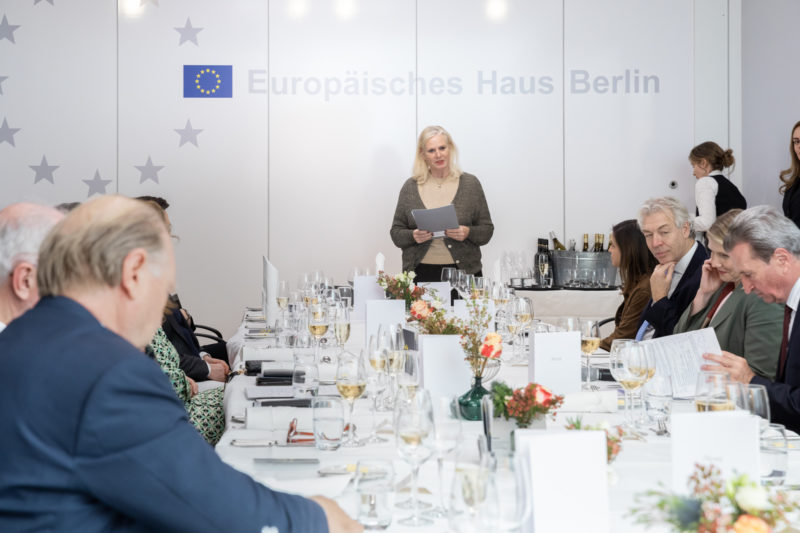
The European idea is pressured both from within and from adversaries abroad. Authoritarian actors are coordinating more tightly than ever, openly challenging Western values and democratic norms.
A Changing Neighborhood and Migration Pressure
Instability is rising in the Middle East and Africa, fueling migration. Europe can strengthen border control, but without economic opportunities in neighboringregions, people will continue risking everything to move north.
Trade, Technology, and Dependencies
Europe must diversify supply chains and reaffirm its commitment to free trade. We must follow the rules we expect others to follow. Otherwise, we will not remain competitive.
Reforming the EU to Act Faster
The EU must become capable of acting decisively. Today, it is often stuck. Decision-making rules need reform. Qualified majority voting may be necessary—especially regarding enlargement. Too many states are blocked by their neighbors’ vetoes.
EU funds should also be tied more strictly to respect for the rule of law.
In short: Europe is under pressure. Only courage, unity, and reform will keep us competitive, safe, and free.